 NookMallow
The practical guides · Furniture & styling
Style a Living Room Around the Sofa You Already Own
A comfortable sofa is a useful starting point. Let its color, shape and everyday job guide the rest of the room.
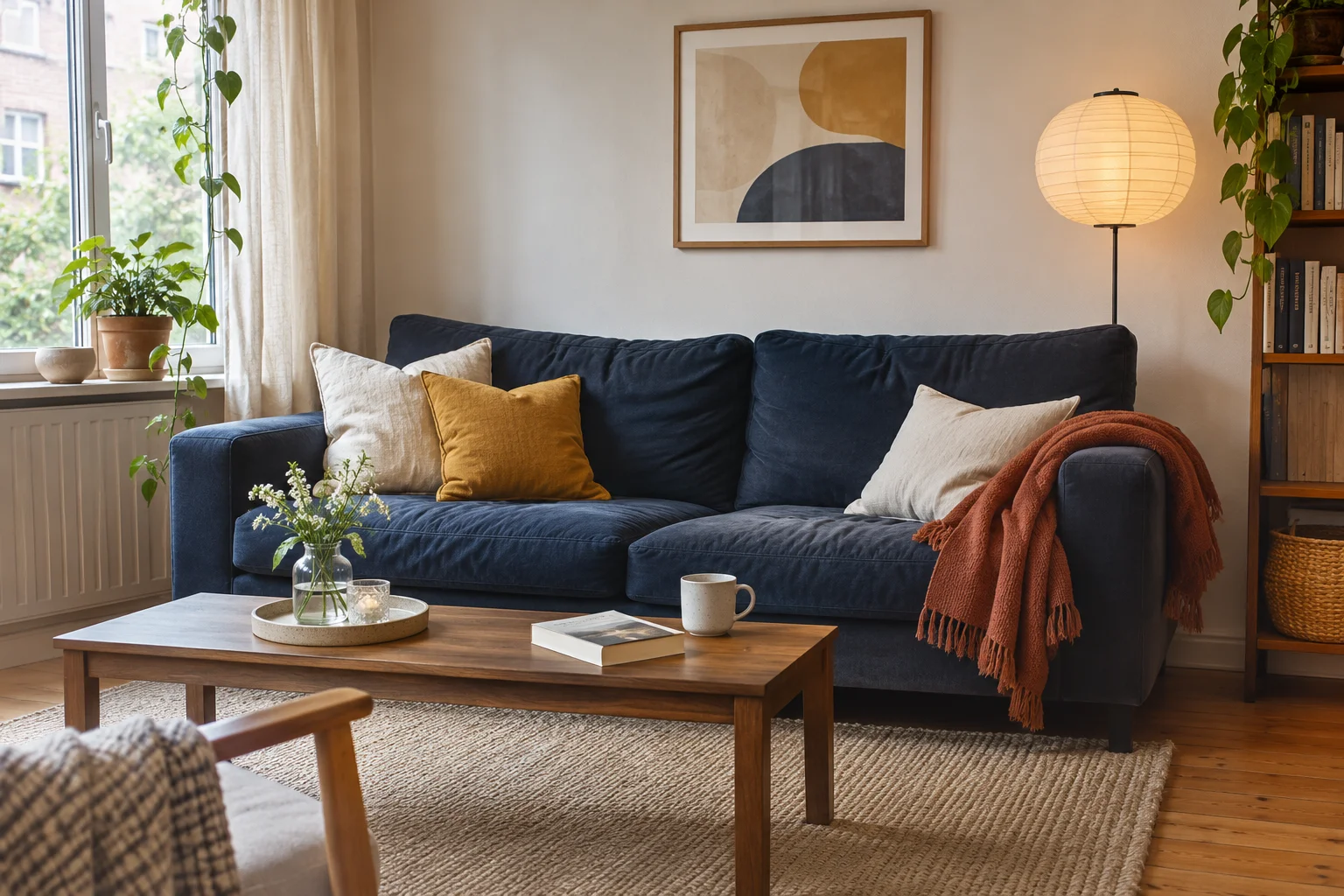
Replacing a sofa can feel like the obvious route to a different living room. But if its size, comfort and condition still work, the more useful question is what the surrounding room is asking it to do. A rug, a lamp or a calmer palette may be the missing connection.
Start by looking at the sofa as it is, rather than as the piece you wish you had bought. Its fabric, undertone and silhouette give you information. Use that information to make a smaller, more deliberate shopping list.
01 / Furniture & styling
Separate a styling problem from a furniture problem
Sit where you normally sit. Can you get up easily, reach a drink and move past the table? Are there enough seats for the people who actually use the room? Photograph the space from the doorway as well as from the sofa; the two views often reveal different problems.
A sofa that blocks a doorway, hurts to sit on or has structural damage needs a different decision from a comfortable sofa that looks disconnected. Cleaning, repairing or changing the surroundings may help the latter. Adding cushions will not solve the former.
- Keep: comfortable seating that fits the room and daily routines.
- Rework: a usable piece that needs cleaning, repair or a different position.
- Reconsider: furniture whose size or condition makes everyday use difficult.
02 / Furniture & styling
Choose colors from the whole room
Look at the sofa beside the floor, walls and furniture you are keeping. A gray sofa can lean blue, green or brown; a cream fabric can look yellow next to a cool white wall. Take a small fabric sample, if you have one, around the room in daylight and lamplight.
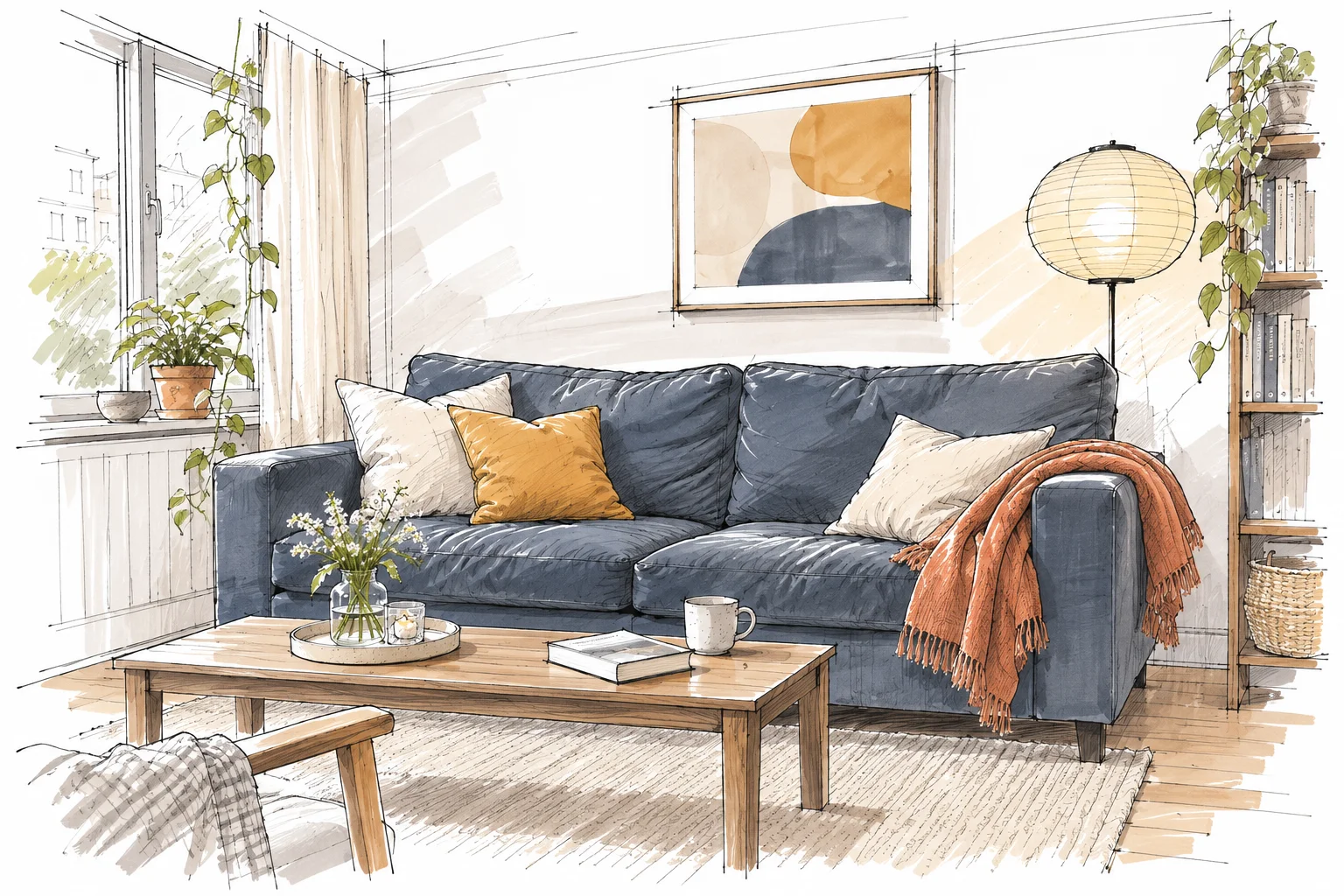
Choose one main supporting neutral and one or two smaller accent colors. In the illustrated room, flax softens the navy while ochre and rust connect the cushions, throw and art. This is one direction, not a formula: brown leather might work with dusty blue, and a pale sofa might need a darker table or frame for definition.
03 / Furniture & styling
Let the rug and table support the seating
Measure the available floor area before shopping. A rug can connect the seating when its edges relate to the sofa and any nearby chairs. Compare possible footprints using low-tack tape tested on the floor, then walk the routes you use. Do not choose a standard rug size from the sofa color alone.
Keep a useful coffee table if its height, reach and footprint work. If it crowds movement, try repositioning it before replacing it. A smaller side table may do a better job in a narrow room. The right arrangement is one you can use comfortably, including when a drawer opens or someone carries laundry past.
Keep the comfortable piece. Give the choices around it a clearer job.
04 / Furniture & styling
Change one layer, then live with it
If the room works in daylight but feels uncomfortable after dinner, start with the light where you read or sit. If it feels visually busy, remove a few competing patterns before buying more accessories. A repeated fabric color in two places can be enough; every surface does not need a coordinated object.
Photograph the first change from the same position as your starting photo. Check whether the problem improved before adding the next layer. Keep the everyday things that make the room useful, such as a basket for chargers or a landing place for a book. Their presence should inform the plan, not be hidden to make a photograph.
05 / A few useful answers
Before you make the next choice.
Do the curtains need to match the sofa?
They need to work with the room, but they do not need to match exactly. Compare fabric samples against the sofa, wall and floor, and consider privacy, light control and care before choosing.
What is the smallest useful first purchase?
Choose the item that solves a named problem. It might be a reading lamp, a better-sized rug or a washable cushion cover. If moving existing pieces solves it, you may not need a purchase yet.
Further reading
For the sizing or lighting principles mentioned above:
Small updates for your sofa corner
Start with the change you’ll notice most when you sit down. Check current price and delivery on Amazon.
As an Amazon Associate I earn from qualifying purchases.
- View on Amazon Paid link
decorUhome light brown plaid pillow covers
Two 18 × 18 in covers that add a soft check to a plain sofa. Match the covers to inserts you already have.
- View on Amazon Paid link
Bedsure gray sherpa throw
A 50 × 60 in throw for the end of a sofa or an armchair.
- View on Amazon Paid link
ROTTOGOON black floor lamp with beige shade
Place it beside the seat you use for reading to add light at that end of the sofa.
Start with your room
Make the next choice yours.
Share your room photos, tell us what stays and set your furniture budget. Find real product options and use an AI preview to explore the direction.
Find furniture for your room Confirm dimensions, availability and delivery at the store. Shipping and tax are separate.