 NookMallow
The practical guides · Furniture & materials
How to Mix Furniture from Different Stores Without Losing the Thread
Furniture does not have to arrive as a set. Give varied pieces a few shared relationships and room to be themselves.
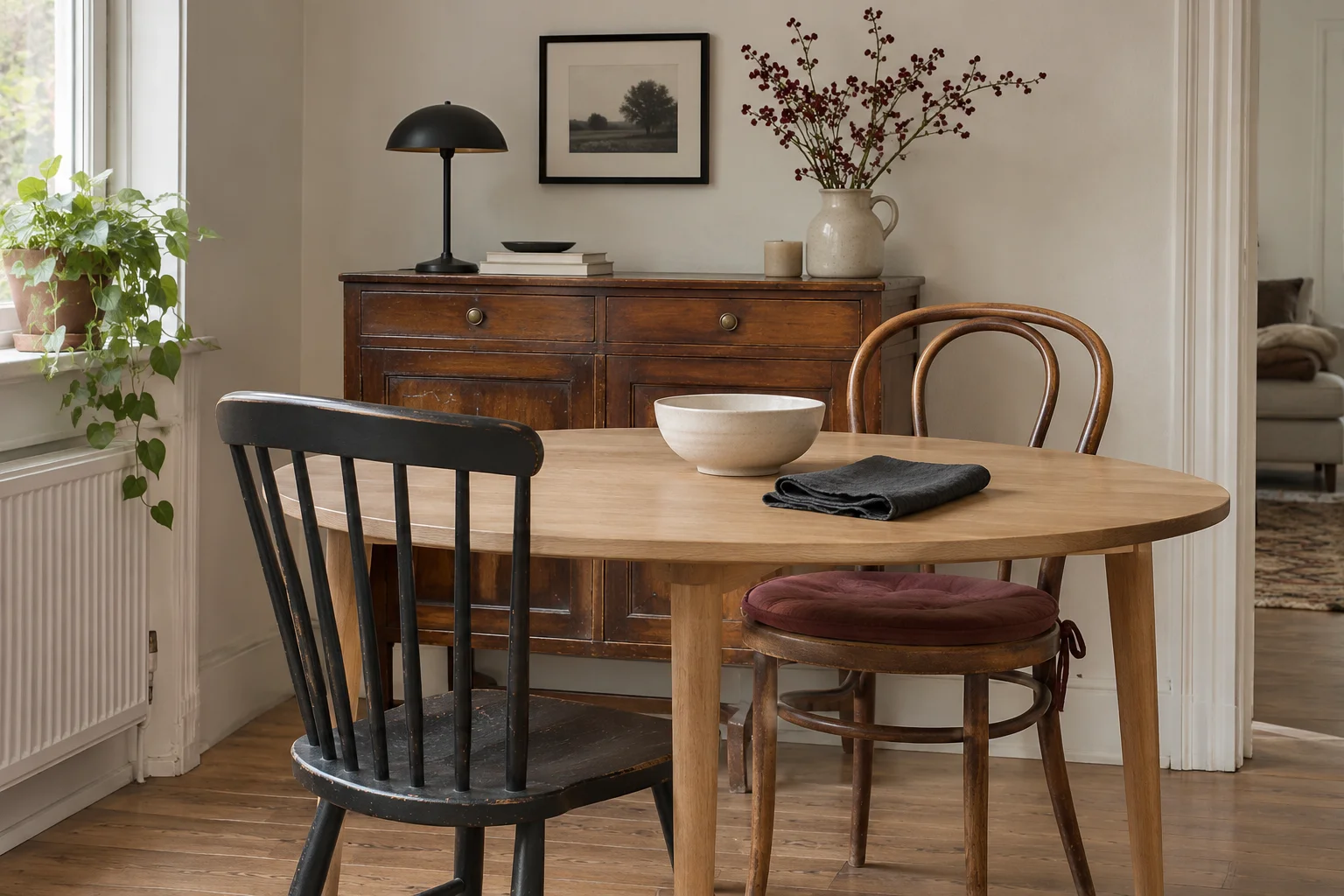
Rooms often come together over time: a table from one store, a chair found secondhand and storage that has moved with you. A matching set is one way to furnish a space, but it is not the only way to make it feel coherent.
The useful question is whether pieces work together in proportion, function and visual weight. Shared details can connect them, while clear differences keep the room from looking like an unsuccessful attempt at an exact match.
01 / Furniture & materials
Check the relationship in use first
Before comparing finishes, compare dimensions. A dining chair needs to work with the actual table: seat height, arm height, apron clearance, leg spacing and the room needed to sit down. Product photographs rarely show all of these relationships. Record measurements for both the retained piece and each candidate.
For a sofa and side table, test reach and usable surface area. For a bed and bedside cabinet, consider access, switches and drawers. Two pieces can look related online and still be awkward together. Use a rough floor plan and a temporary footprint before committing to a visual direction.
| Pairing | Check before the finish |
|---|---|
| Dining table + chair | Seat and arm height, apron and leg clearance |
| Sofa + side table | Reach, usable top and route past the seat |
| Bed + cabinet | Access, surface height and drawer opening |
| Storage + room | Doors, drawers, vents and delivery route |
02 / Furniture & materials
Give one material a leading role
Choose a piece that already matters in the room and let it establish a starting material or tone. A pale oak table might sit comfortably with darker vintage storage if a smaller dark detail appears elsewhere, such as a lamp or frame. The room gains a connection without requiring the woods to be identical.
Treat finish names cautiously. Oak, natural and walnut describe broad product categories rather than guaranteed matches. Compare samples or close-up listing photographs, noting grain, sheen and undertone. Similar-but-different finishes can draw more attention than an intentional light-and-dark combination, particularly when the pieces touch.
On a small screen, swipe across the worksheet.
A few shared relationships.
- Fit first
- Check reach and clearance.
- Compare finishes
- Undertone, grain and sheen.
- Connect the pieces
- Repeat one small detail.
03 / Furniture & materials
Mix shape and visual weight deliberately
Look at the outlines in a simple sketch. If the table has a heavy solid base, a lighter chair outline may give the grouping more breathing room. If several pieces have curved forms, one simpler straight-edged piece can make the arrangement easier to read. These are composition choices to test, not rules about which styles may coexist.
Use repeated details sparingly. The illustrated dining corner repeats black in a chair, lamp and frame while letting the table and sideboard remain different. If every piece is trying to be the focal point, remove one strong pattern or silhouette before adding a new item to bridge the gap.
Repeat a relationship, rather than buying everything in the same finish.
04 / Furniture & materials
Compare exact variants in one shortlist
Keep product links, dimensions, finish names and quantities together. Save a picture of the exact variant, because one listing may contain several sizes or colors. Check whether chairs are sold singly or in pairs and whether the displayed price includes the quantity your plan needs.
Compare delivered totals and return conditions across stores. Delivery dates may differ, and a return to one merchant does not settle another purchase. Once the furniture arrives, judge it in the same room and light before opening every remaining package. A cross-store plan should make the shopping clearer, not turn several attractive products into an assumed matching set.
05 / A few useful answers
Before you make the next choice.
Can light and dark wood work in the same room?
Yes. Compare undertone, grain, sheen and the amount of each finish visible. An intentional contrast can work well, especially when a small repeated detail connects the pieces.
Should all dining chairs be identical?
They do not have to be, but each needs to fit the table and the people using it. Check comfort and clearances before choosing a mixed arrangement for appearance.
Start with your room
Make the next choice yours.
Share your room photos, tell us what stays and set your furniture budget. Find real product options and use an AI preview to explore the direction.
Find furniture for your room Confirm dimensions, availability and delivery at the store. Shipping and tax are separate.