 NookMallow
The practical guides · Furniture sizing
How to Choose a Dining Table for a Small Apartment
The table gets most of the attention. Its chairs and the space behind them usually decide what fits.
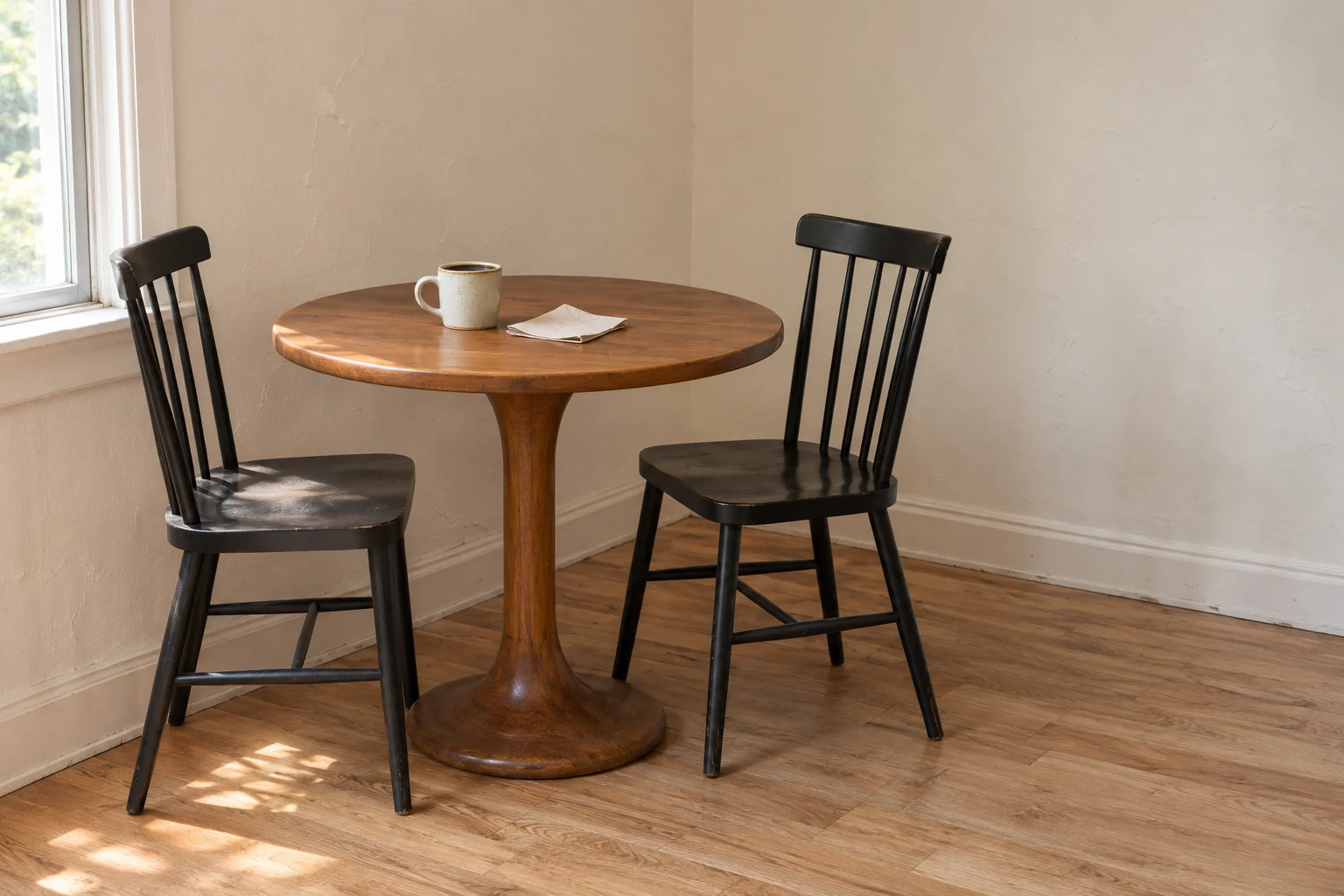
For a small apartment, choose the dining table size after checking where the chairs pull back and people walk. A 30-inch round table can be a useful candidate for two in the right nook. A shallow rectangle or a drop-leaf table may fit better when meals happen beside the kitchen route.
Measure at floor level and at table height. The tightest point might be a radiator, the bar of a peninsula, or a door handle. Write down the space left on each side so you know which seats can be used every day.
01 / Furniture sizing
Measure the space behind a real chair
Work from the table edge to the nearest wall or obstruction. Room & Board starts with 36 inches around a table. IKEA suggests about 43 to 47 inches where someone needs to get past a chair, with more space for a comfortable walkway behind diners. Those are planning guides. Try the movement with your actual chairs and keep the busiest route as open as possible.
Check how far the seat slides under the top and whether the arms catch on the underside. At the store, compare the space between the legs and the size of the base. Two tables with the same top can give you different usable seating space.
02 / Furniture sizing
Pick a shape for the way you eat
A round pedestal table works well when two people can sit across from each other and the corners of a rectangular top would intrude into a route. Try a small rectangular table against an unused wall if the room is narrow and the long side can do double duty as a workspace.
Consider a drop-leaf table if you host occasionally. Write down both the closed and open dimensions. Before you count the extra seats, check the support legs and where the moved chairs will sit.
| Shape | Where it tends to work |
|---|---|
| Round pedestal | Two daily seats in a roughly square nook. |
| Shallow rectangle | Against a wall, with chairs on open sides. |
| Drop-leaf | Compact on weekdays, with room to extend for guests. |
03 / Furniture sizing
Test an example nook measuring 7½ by 8 feet
In a 90-by-96-inch nook, a centered 30-inch round table leaves 30 inches on each side across the narrow dimension and 33 inches at each end. In this arrangement, place two chairs at the ends. The side gap may be workable as a route when it has no chair in it. Test it with the people and items that move through the room.
If you want 36 inches on one side for the route, shift the table 6 inches toward the opposite wall. The gap on that side drops to 24 inches, so keep it chair-free. If people have to pass behind someone who is eating, revisit the layout and allow the extra space for that. A shallow wall-side table with seats clear of the route is another option.
The best test is dinner with one chair out and someone walking through.
04 / Furniture sizing
Do a trial meal before ordering
Mark the top outline on the floor and use two chairs you already have as stand-ins. Pull a chair back, stand up, and let someone go by holding two plates. Try a laptop, dinner plates, and a serving bowl on your current table to see how much surface you use.
Compare the chairs you plan to buy against that test. Confirm seat height, arm height, and the clearance under the top. If the dining area shares a rug with another zone, check whether the chair legs catch its edge. Put the actual shortlist together only after you know where people can sit and walk.
05 / A few useful answers
Before you make the next choice.
Is a 30-inch round table big enough for two people?
It can work for two place settings and everyday meals. If you often put serving dishes in the center or use the table as a desk, try a larger paper outline to see how much tabletop you need.
Does a round table always save more space than a rectangular one?
A round table can make the corners of an open nook easier to pass. A shallow rectangle can make better use of an empty wall. Mark the chair positions for both shapes when you compare them.
How do I check whether my chairs tuck under the table?
Compare the outside chair width and arm height with the clear width between the table legs and the height under the apron. With a pedestal, check where diners’ feet land around the base.
Further reading
For the sizing or lighting principles mentioned above:
Start with your room
Make the next choice yours.
Share your room photos, tell us what stays and set your furniture budget. Find real product options and use an AI preview to explore the direction.
Find furniture for your room Confirm dimensions, availability and delivery at the store. Shipping and tax are separate.