NookMallow
Room story · Scandinavian-inspired
Scandinavian-inspired dining for a small apartment
Start with daylight, a clear route to the kitchen, and the way you actually eat at home.
A dining nook has to work on an ordinary weeknight. Someone needs to get past with dinner, a chair needs room to pull out, and the table needs to be clear enough for two plates. That daily routine is a good way into Scandinavian-inspired decorating. The look works especially well in tight spaces because daylight, useful shapes, and a handful of warm materials can do most of the work.
What makes a small nook feel Scandinavian-inspired?
Scandinavian design covers a broad range of furniture and interiors. For a small dining nook, start with three of its familiar qualities: simple forms, practical details, and a light, comfortable room. A wood table with visible legs lets the floor read continuously underneath. A chair with an open back lets the eye travel through the room. A window covering that can be raised during the day keeps the table in the light.
Pale timber and white walls are one way to get that feeling. Walnut can also work, especially when the walls are light and the furniture has open silhouettes. Darker wood brings a little weight to a corner that would otherwise disappear into the kitchen. Let the wood be the main contrast and keep the other colors quiet. Here, a muted stripe, a bit of green, and one rust cloth are enough.
Plan for dinner, then for company
Pick the number of seats you use most days. Two seats with clear access are usually easier to live with than four chairs you have to move every time you pass. Use tape to mark the tabletop on the floor, pull a chair out as if you were getting up, and walk your route to the kitchen. Test it with someone sitting down, too. If a straight edge gives you a better fit along a wall, try a square table. If people need to walk around several sides, compare it with a round tabletop. The shape earns its place by how it works in your room.
A narrow sill can hold a plant, while a shallow tray or a spot elsewhere for the mail can free up the whole table. When one surface serves for eating, paperwork, and coffee, giving those objects a place to go matters as much as the furniture you choose.
Case study: turning a spare desk into a dining nook for two
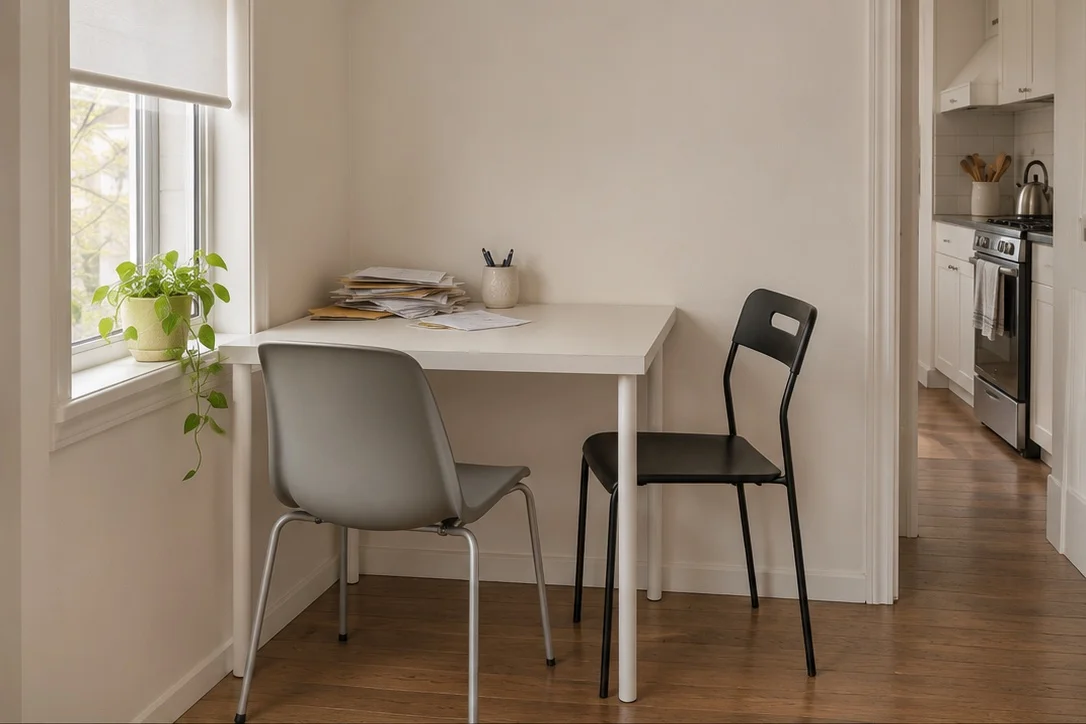 Before
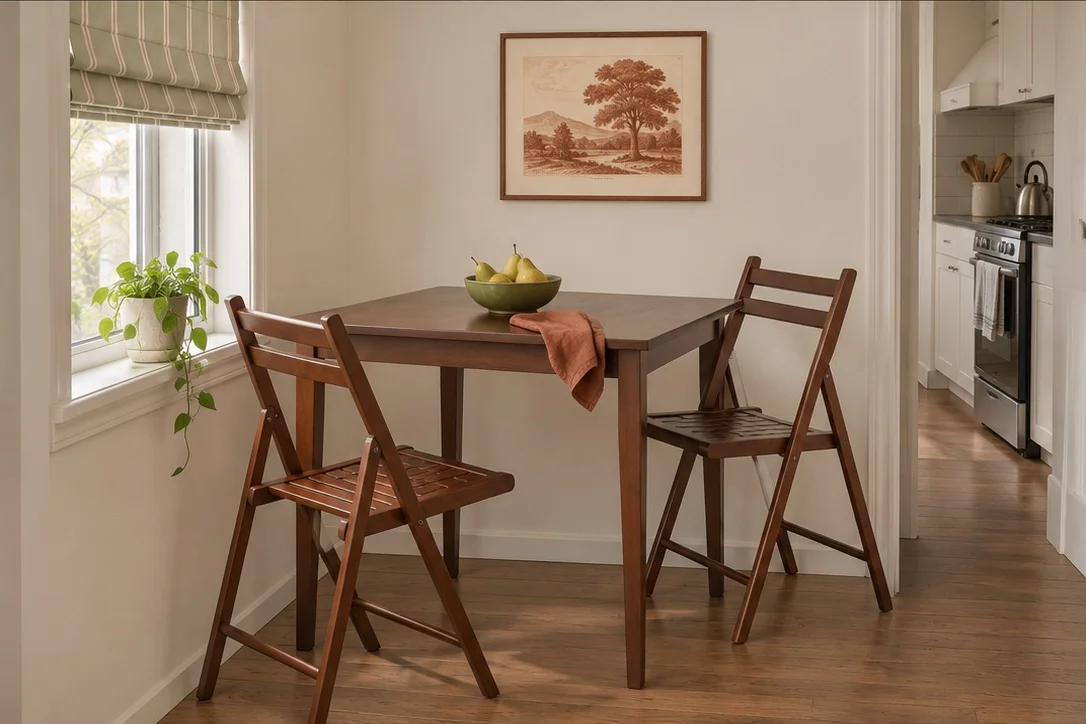 After
Before: a desk in the corner was doing too many jobs
The light from the window already made this a good place to sit. Papers had collected at the back of the white desk, and the two mismatched chairs pulled attention toward the kitchen doorway and away from the window. The table worked as somewhere to put things down. It didn’t yet read as a place set aside for meals.
After: two seats and a clear purpose
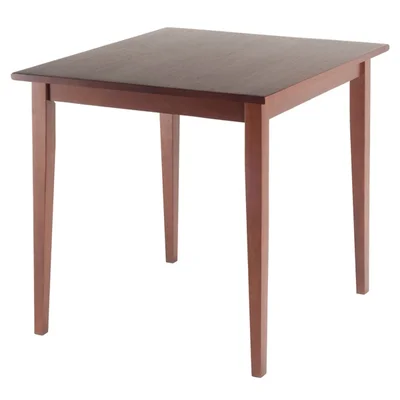
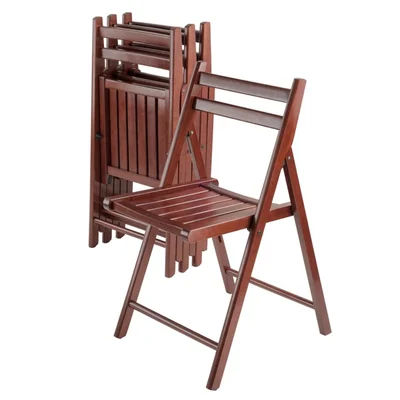
The square Winsome Groveland table in walnut gives the nook a footprint of about 29½ inches on each side. One chair faces the back wall, and the other sits on the side by the doorway. In a real room, test that second seat with someone in it. If the route feels tight, try moving the seat before changing the table. The Winsome Robin folding chairs in walnut have slatted backs and seats that keep the darker finish from looking heavy. They come in a set of four. The case uses two, so check whether you have room to store the others.
The striped shade softens the window and the small print gives the back wall a point of focus. The plant stays on the sill. Compare the two tabletops: the first holds a pile of mail, while the second has space around the bowl and napkin. Clearing that surface does as much for the feeling of the nook as changing from white laminate to walnut.
Pieces in this makeover
As an Amazon Associate I earn from qualifying purchases.