 NookMallow
The practical guides · Rugs & entryways
What Size Runner Fits a 36-Inch-Wide Hallway?
Start with the narrowest part of the hall. Then choose where the rug can end without catching a door.
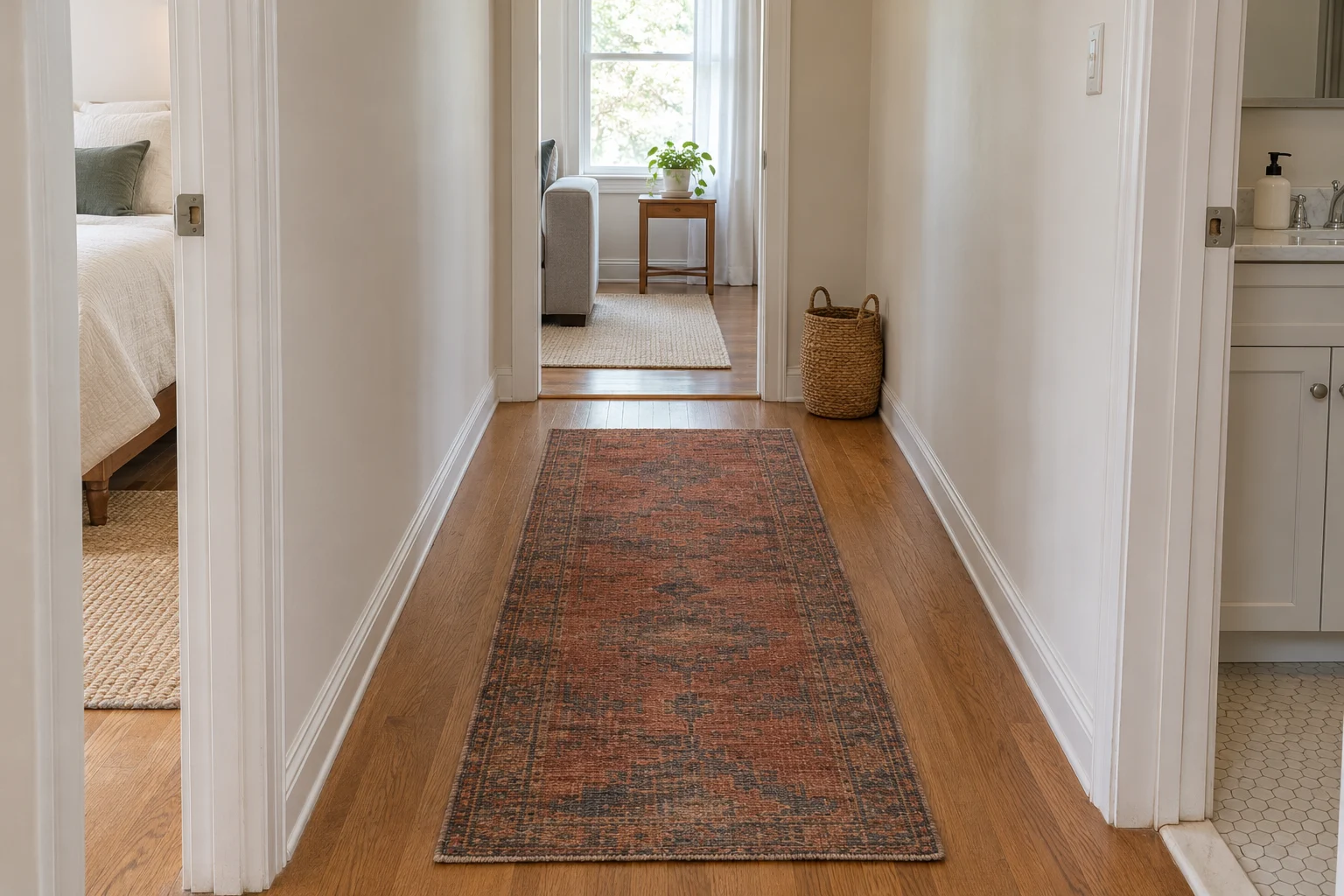
A centered 24-inch runner leaves 6 inches of floor on each side of a 36-inch hallway. A 30-inch runner leaves 3 inches per side. The 24-inch width is a good first outline to test where the hallway has an inward-opening door or changes width, and the 30-inch width gives more floor coverage when the route stays clear.
For length, measure the usable straight section between thresholds and door swings. An 80-inch usable section can take a 72-inch runner with 8 inches left to split between the ends.
01 / Rugs & entryways
Measure the narrowest width along the rug
Measure the clear floor between baseboards and fixed obstacles at a few points. If an entryway rack shares the stretch, check how far the rack and the shoes on it extend. Use the narrowest width along the runner’s proposed path.
Subtract the rug’s actual width from that clear width, then divide by two for a centered position. If a pipe or a shallow cabinet prevents centering, place a cardboard outline on the floor and see whether the edge interferes with the route.
| Runner width | Floor each side in a 36-in. hall |
|---|---|
| 24 in. (2 ft) | 6 in. |
| 26 in. (2 ft 2 in.) | 5 in. |
| 30 in. (2 ft 6 in.) | 3 in. |
02 / Rugs & entryways
Set the length around the thresholds
Measure from the spot where you want the runner to start to the furthest point it can end. Mark any threshold, stair edge or door swing you need to keep clear. A hallway can be longer than it looks on paper and still have one short straight stretch for a rug.
For example, a 114-inch hallway with 19 inches set aside at the entry and 15 inches at the opposite threshold has an 80-inch stretch available. Both 6-foot runners below leave 8 inches in that stretch. Split it evenly or move a few inches toward the end with more space for the door.
03 / Rugs & entryways
Test the door with the full thickness
Open the door slowly through the whole arc and find the smallest gap between the door and floor. Check the rug’s edge binding and the pad as well as the main rug surface. A quarter-inch rug with an eighth-inch pad uses three eighths of an inch before a raised seam or uneven floor comes into play.
If the numbers are close, test the actual materials or place the rug outside that part of the swing. Choose backing and any pad that the makers describe as suitable for your floor. After you lay it down, check that it stays flat at corners and feels secure as you walk past.
Let the parts of the hallway you use every day decide where the rug starts and stops.
Two six-foot runners in different widths
These examples have the same length and different widths. The card images are AI-generated illustrations. Check current price and delivery on Amazon.
As an Amazon Associate I earn from qualifying purchases.
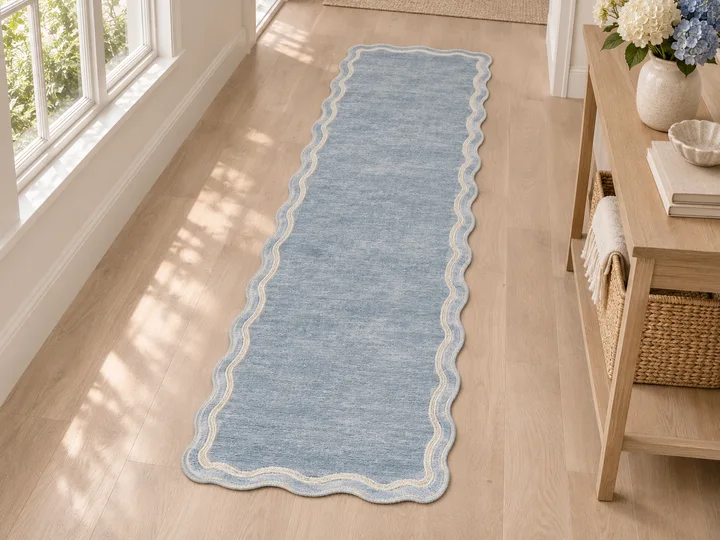
Lahome Estelle blue runner, 24 × 72 in.
The 2-ft width leaves 6 in. of floor per side in a 36-in. hallway when centered. The lightly scalloped edges frame the blue field.
View on Amazon Paid link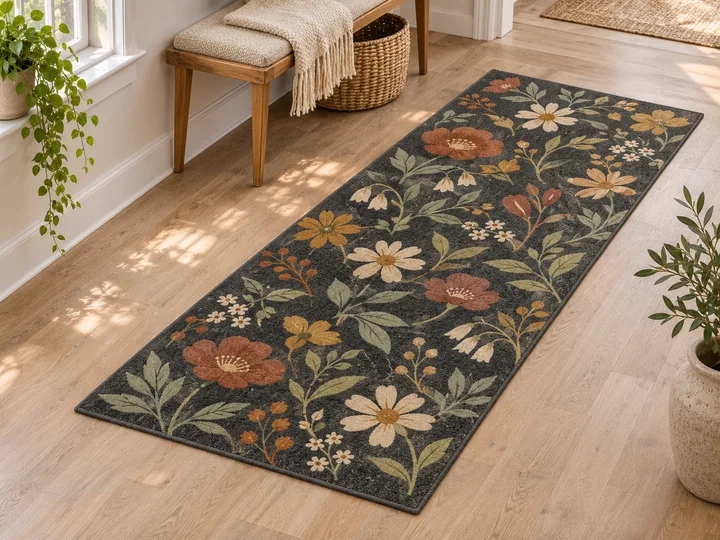
Maples Rugs Reggie floral runner, 30 × 72 in.
The 2-ft-6-in. width leaves 3 in. of floor per side when centered in the same hall. Check door clearance at the edges.
View on Amazon Paid link
04 / Rugs & entryways
Try both widths from the front door
Mark 24 and 30 inches on the floor with finish-safe tape or paper. Walk the route carrying a bag, open each door, and stand where you normally take off shoes. Compare how the outlines look from both ends. A wide stripe of bare flooring can make a short runner look deliberate.
For patterned runners, look at how much of the pattern stays visible at the narrower width. A bordered design can frame a small section of hall, while an all-over pattern can tie several doorways together. Use the product’s care instructions when choosing for an entry that often gets wet or muddy.
05 / A few useful answers
Before you make the next choice.
Is a 2-foot runner too narrow for a 3-foot hallway?
A 24-inch runner leaves a 6-inch border on both sides in a clear 36-inch hallway. That is a practical width to test if you want the flooring to show or need to leave room near door trim.
Can a 2-foot-6-inch runner fit the same hallway?
It leaves 3 inches per side when centered. Check the narrowest point and the total thickness wherever a door crosses it.
Should a runner reach both ends of the hallway?
Choose the length for the clear section where the rug can lie flat. A visible floor gap at each end gives you flexibility around doors and thresholds.
Further reading
For the sizing or lighting principles mentioned above:
Start with your room
Make the next choice yours.
Share your room photos, tell us what stays and set your furniture budget. Find real product options and use an AI preview to explore the direction.
Find furniture for your room Confirm dimensions, availability and delivery at the store. Shipping and tax are separate.