 NookMallow
The practical guide · Budget refreshes
A room refresh
on a budget.
What to keep and what to change first.
A room can feel different before everything in it is different. Start with what works, choose the problem worth solving, and give every new piece a reason to be there.
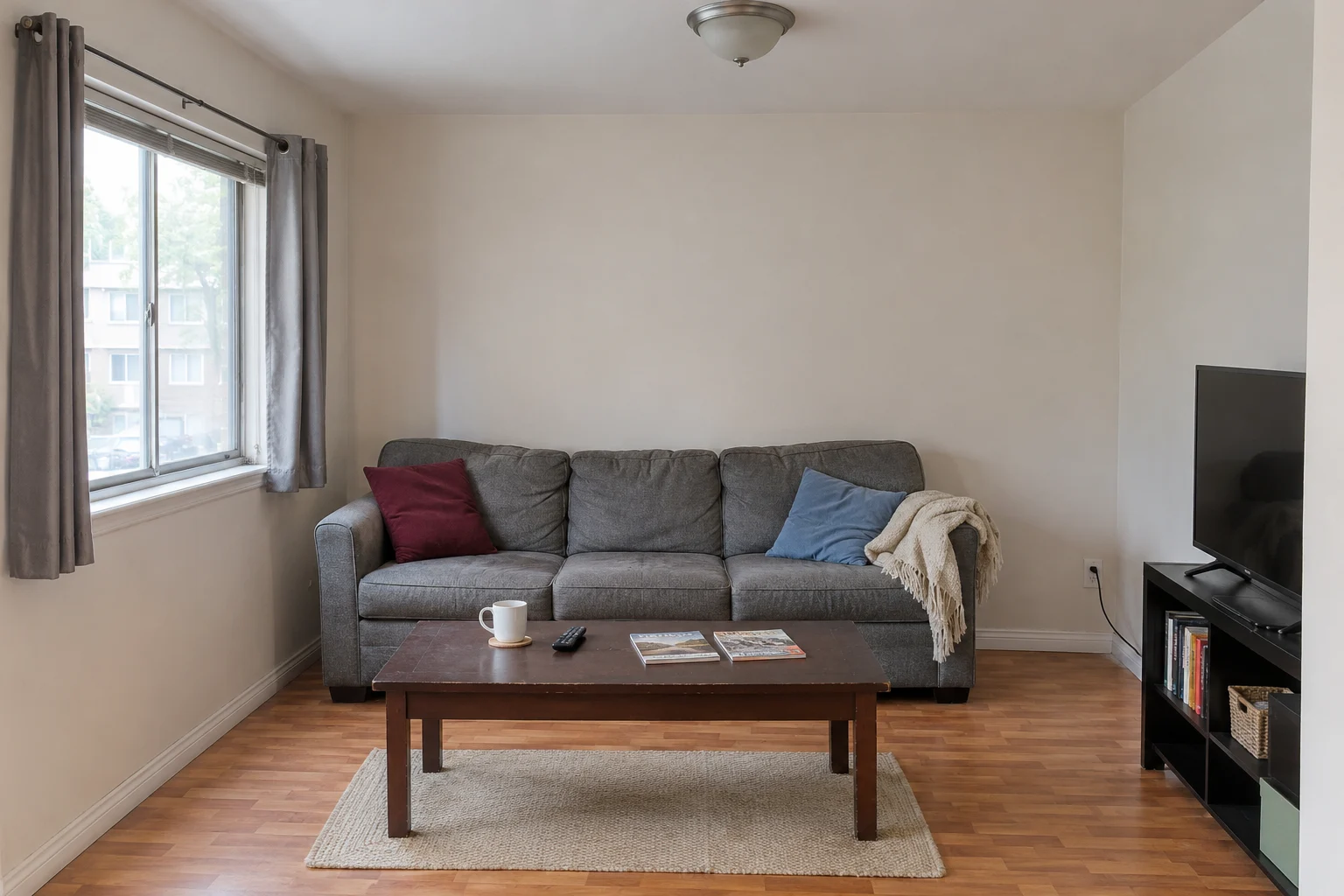
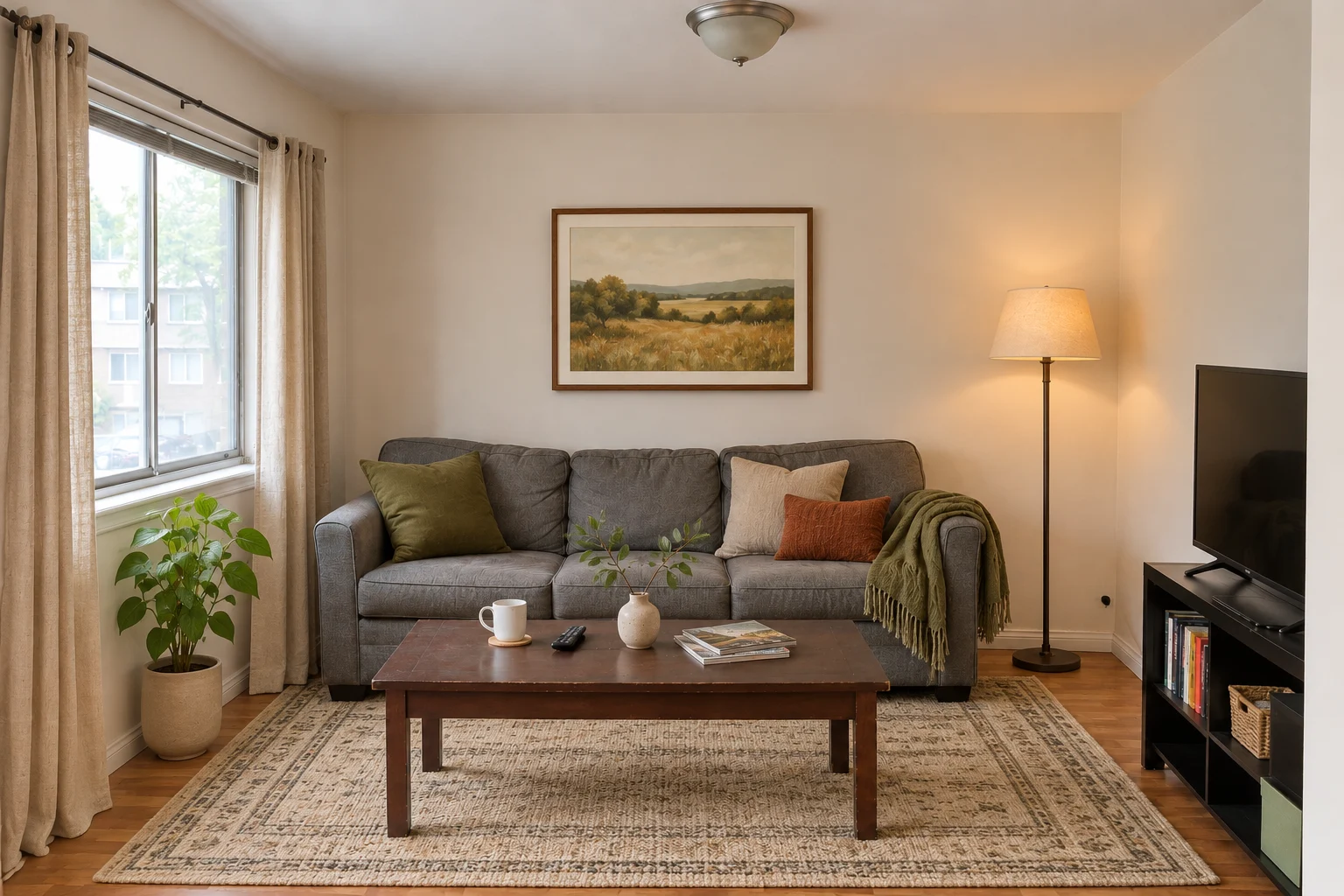
An AI styling study of the same room, with the sofa and coffee table kept. Illustrative, not a customer project or a priced shopping list.
You’ve looked at the room long enough to know something isn’t working. The temptation is to start with the biggest thing: a new sofa, a new bed, a whole new set. A more useful first step is to ask what is making the room difficult to live in.
Perhaps the sofa is comfortable, but the coffee table crowds the walkway. Perhaps the bed works perfectly, but the lighting makes the room feel harsh at night. Those are different problems, and they deserve different shopping lists.
01 / Take stock
Give the furniture you own a fair look.
Take a few photos from the doorway and from the places you actually sit. Look at the room in daylight and again in the evening. Then sort what you own into three short lists.
- Keep
- Pieces that are comfortable, useful and the right size. A good bed frame or a sofa you enjoy using can be the starting point, even if its finish isn’t your first choice.
- Rework
- Things that might work better somewhere else, with less around them, or after a straightforward clean. Try moving a side table or simplifying a crowded shelf before buying replacements.
- Replace
- Pieces that fail an everyday job: a chair that is uncomfortable, storage that doesn’t hold what you need, or furniture that repeatedly blocks movement. Unsafe or damaged items deserve attention before decorative changes.
Sentimental pieces get a separate question: do you want them in this room, or do you simply want to keep them? Finding a better place for an object can make more sense than buying a roomful of furniture to match it.
02 / Pick the problem
Name one thing you want the room to do better.
Make the brief specific enough to act on. “Feel nicer” is difficult to shop for. “Have somewhere comfortable to read after dinner” gives you a place, a task and a reason to choose a piece.
| What isn’t working? | What to try first |
|---|---|
| The room feels crowded | Remove or reposition a piece; measure the available space before shopping. |
| There is nowhere to put daily clutter | Work out what needs storing, then look for storage that suits those objects. |
| The room feels flat | Try a small, repeated palette and a mix of textures around the furniture you’re keeping. |
| The room is uncomfortable in the evening | Check seating and lighting where you spend time, rather than choosing by appearance alone. |
If there are several problems, start with the one you notice every day. It is easier to judge whether a change helped when you know what you wanted it to solve.
03 / Buy in order
Choose the anchor. Then choose what supports it.
Your anchor is the piece the room works around. It may already be there: the bed, the dining table, the sofa. If it needs replacing, settle its size, shape and practical requirements before choosing the smaller pieces.
A different sofa can change the space available for a coffee table and rug. New dining chairs need to work with the table’s height and the space underneath it. Buying the supporting pieces first can leave you trying to make an expensive mismatch work.
If the main furniture works, keep the next step small.
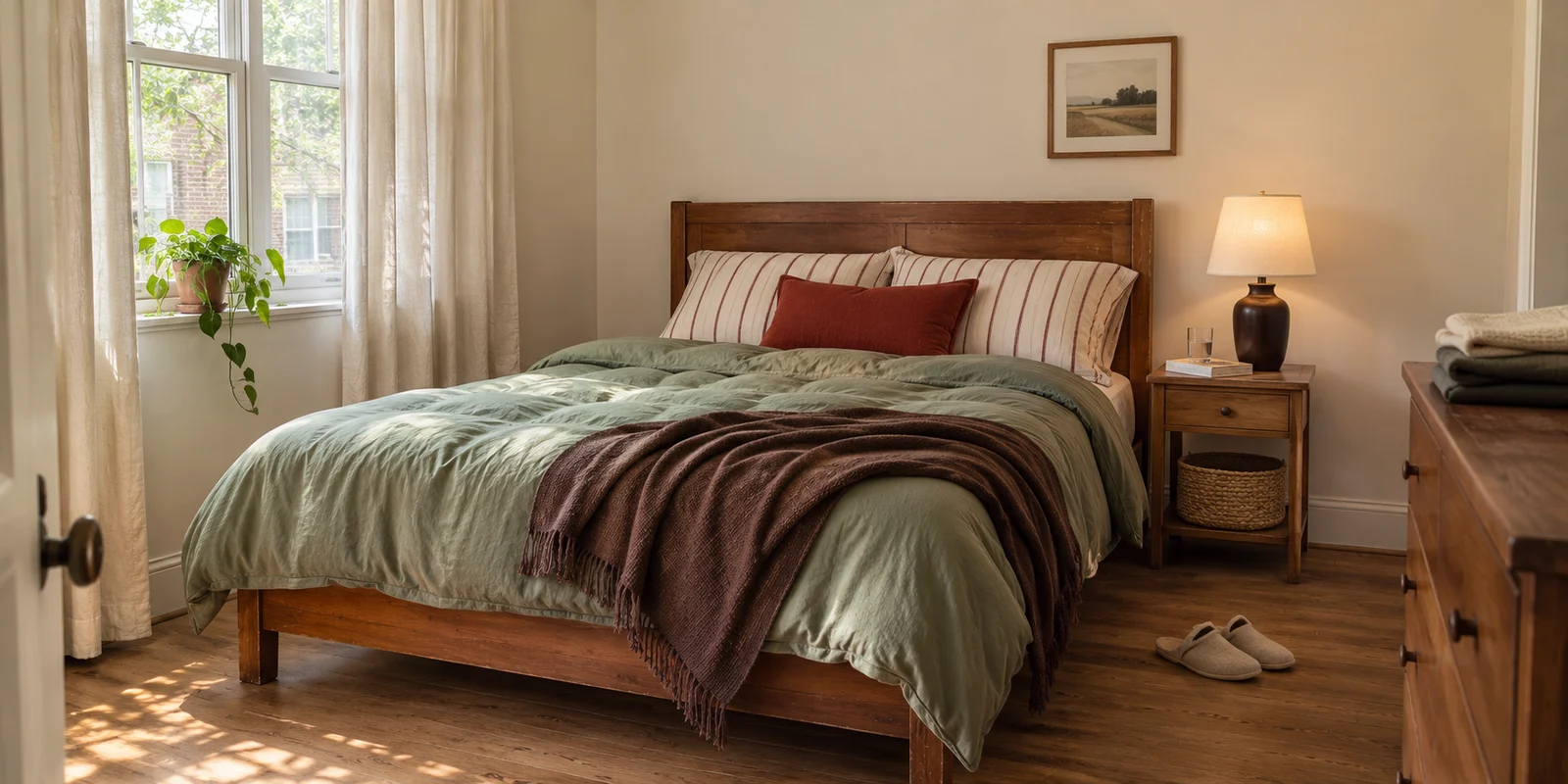
Try one change tied to your brief. A reading corner might need a lamp beside an existing chair. A bedroom might benefit from a more coordinated set of bedding. A living room may need a coffee table that leaves more room to move. The best first purchase depends on the room.
For color, start with something you are keeping: upholstery, flooring, a rug or a favorite artwork. Choose a small palette around it and repeat a color or material in a few places. There is no need for every wood finish or fabric to match.
Pause before the finishing layer.
Live with the main change for a little while. You may find the room needs fewer decorative pieces than you expected. Keep your receipts and packaging until you’ve checked the purchase in the room, within the store’s return conditions.
04 / Make a budget
Leave room for the costs around the furniture.
A product price is only part of a purchase. Delivery, tax, assembly and return fees can affect what feels affordable. Decide whether your number is a furniture-only budget or the total you can spend.
Here is a hypothetical $500 total spending plan for a living room where the sofa stays and the coffee table is the main problem. These are planning allowances, not product quotes or current market prices.
| Purpose | Allowance |
|---|---|
| Main change: a better-sized coffee table | $260 |
| Supporting textiles, if needed | $100 |
| A lighting update, if needed | $60 |
| Delivery, tax and contingency reserve | $80 |
| Total spending cap | $500 |
The planned product subtotal is $420. If the actual delivery and tax exceed the reserve, reduce the product list or postpone a supporting purchase. An allowance is a limit, not an instruction to spend it.
When you use NookMallow
The furniture budget in your brief covers new products. Shipping and tax are separate. If you have a total spending cap, set some money aside for those costs before entering your product budget.
A little perspective
A room comes together through choices.
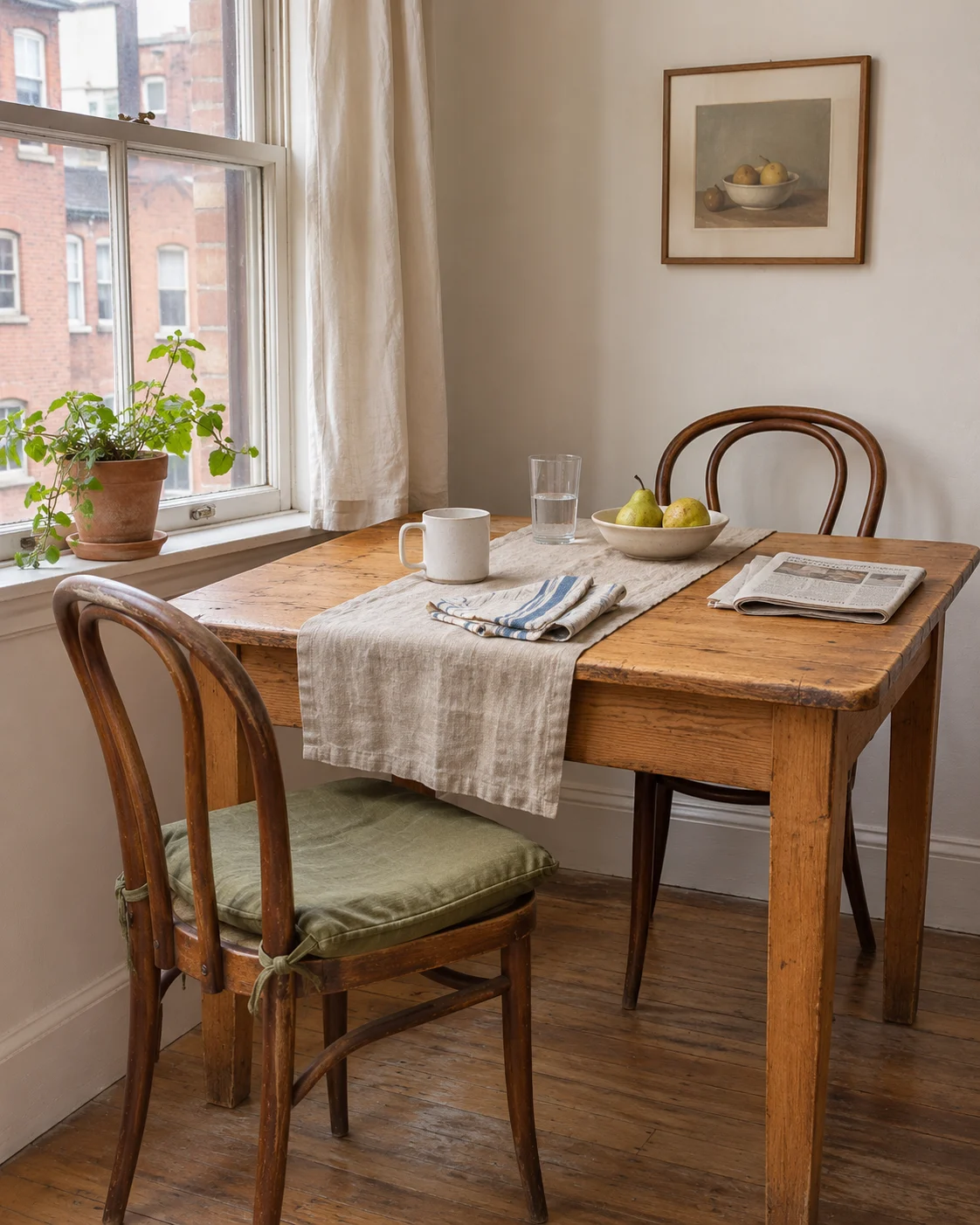
Before adding something, decide what it will do: make the room easier to use, connect the palette, or solve a need you can point to.
Leaving a little space, and a little budget, can be a good decision too.
05 / Before checkout
Make the last check in your room.
- Measure the footprint. Mark out the proposed piece on the floor and check movement around it. Measure access through doors and stairs too.
- Check the exact version. Confirm the size, finish, quantity and what is included in the listing.
- Read the full cost. Compare the delivered total and the return conditions, including return shipping.
- Name its job. Can you say what this purchase improves? If the answer is unclear, give yourself time.
A room refresh can happen in stages. Keep what earns its place, solve one clear problem, and let the next decision come from how you actually use the space.
Start with your room
Find the pieces that make sense for you.
Show NookMallow your space, tell us what stays and set your furniture budget. Explore a coordinated selection of real products, shopping links and an AI room preview.
Find furniture for your room Back to Inspiration